Incremental / packing puzzle01
Scrap & Pressure
Scrapyard OS · Station #04 — pack tight, press hard.
1 update · 2 months agoGame devlog →

Independent game studio
Mercy Noise is an independent game studio. We make small games about quiet, warm things — and build them in the open, day by day, update by update.
What we are building right now
Scrapyard OS · Station #04 — pack tight, press hard.
A cozy incremental about a campfire in a freezing forest — warm lost spirits before the Great Cold arrives.
A cozy reverse-stealth about a house spirit doing good deeds at night.
A princess in a dark world shoots kindness — healing enemies at the cost of her own Light.
A small studio with big plans
A living development diary — updates, decisions, discoveries
I set out to make a game for a jam called High Score Chasers. The folder on disk still says `bet-survivors`, because that's what the project was called before it died. What shipped is Scrap & Pressure: scrapyard OS, Station #04, pack tight, press hard. Here's the real path from one to the other.
Reflection after release. June 21, 2026, 4 a.m. — the game shipped. 11:35 p.m. the same day — I'm writing this. Trailer: Watch Video At: https://youtu.be/ouI2J_3FD-s Play it here: Come Closer, It's Cold First there was a Game Design Doc. Then — paralysis Like everyone, I started with a Game Design Doc.
Four spirits max on night one. Difficulty ramps. Every tweak meant playing through by hand. Needed automated runs and a web UI to tune spawn pacing.
We replaced the flat forest sprite on Main with a scripted layer cake built from the bonfire pack. Hills and near/far forest got calm sine sway; mist reacted to crisis starts and ends. When that felt like too much ship, we turned the amplitude down—twice—after “it makes me seasick.” Then the meadow became the argument.
Above the fire we had a row of six ember dots. They tracked how many spirits you’d warmed that night. In play that felt like a win condition: fill six, you’re done. That collided with how the night actually ends — you survive until dawn on a timer, not by hitting a spirit quota.
After #12, the clearing could hold more spirits — but bench2.py was still living in an older economy. Win condition was “six warmed at once.” Stoke was modeled as clicks, not hold. There was no ramp between nights, no shop spending, no five-night run.
Spirits had been living in a fixed queue: six hard-coded slots, four waiting at most. That felt fine early on, but it was a ceiling we could feel every time the night got busy. The task for this session was straightforward — drop SLOTS and MAX_WAITING_SPIRITS, and let the crowd breathe.
The five-night demo needed an ending—not a menu loop. By Night 5 the player has felt meta power: upgrades, maybe the Salamander, a clearing that finally greens up. That’s the point. The demo shouldn’t fade out on a win screen.
The loop already had meta behind the scenes—Gifts, upgrades, nights stacking up—but the clearing stayed visually dead. We wanted progress you could see without turning the meadow into a base-building screen. Mushrooms and grass, not structures.
Night 3 was already doing a lot: fog, hidden costs, pressure from the cold. What it didn’t have was a reason to care about one spirit in particular. We wired the first scripted guest — the Fire Salamander — into that fog beat on purpose. You’re already squinting at ??? when she walks in.
about information — it would be about time. Night 3 needed a mechanic that punished leaving spirits in the cold without undoing everything we’d already built: fog’s ??? costs, frost wind’s knockback and refreeze, ice rain and thaw on nights 4+. Wind, night 1, and the Gifts → shop loop were off limits.
After #6’s fog — hide the numbers, force a blind gamble — we wanted the crisis roster to keep hitting different resource loops instead of “everything hurts the fire the same way.” GDD §4.5 calls for ice rain (fuel economy) and thaw (rare relief).
start/end signals, and Frost Wind still behaving exactly as before. The next design beat on the board was the first crisis that doesn't touch the math — Fog — plus the demo's narrative turn (a story spirit and the Salamander artifact).
Frost wind was doing its job — it spikes pressure, triples fire decay, freezes spirits, muffles the music — but it lived in one place as a bespoke loop. That was fine for a single crisis. It wasn’t fine for what the game actually needs.
No new features this session. We stopped and audited the whole prototype against the design doc and the five-night demo plan — what’s in the build, what’s only on paper, and
For two devlogs we've called this a "cozy incremental about a campfire." That was a comfortable lie. This time we admitted what the game actually wants to be — Cozy- Frostpunk — and ripping the bandage off meant deleting the one screen that used to mean "you won."
One campfire. A cold forest. Frozen spirits drifting toward the light. You stoke the fire, throw logs, spend sparks to warm the lost souls — each one making the flame a little easier to hold.
Hey, first post here. Let me keep it short. I'm not a game developer by trade. I do marketing. But I spent the last few months going deep on game design — books, talks, dissecting mechanics — and eventually decided to just build something instead of theorizing forever.

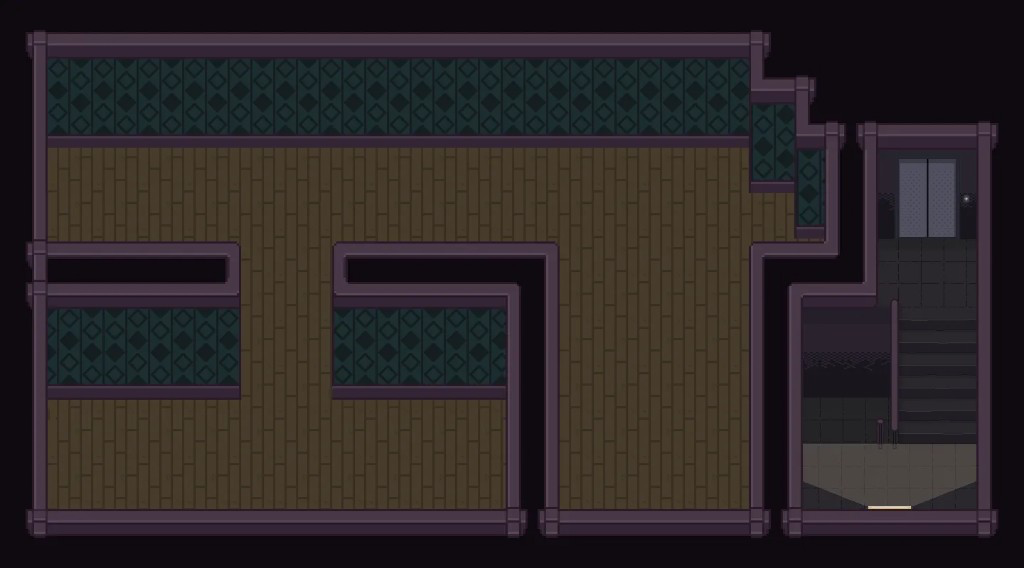
Drew the first floor — apartment 47. A fully hand-drawn room that the whole scene and furniture layout are built upon.
Built a separate HTML sandbox to feel all 12 levels, and wrote a Python simulator that honestly measures playthrough length. The numbers showed the game was too short. Rebuilt the progression and picked Scope B — a single short cozy story of ~1.1 hours: one night, 24 apartments, the spirit descending from roof to ground.
Playtests showed newcomers couldn't clear even level one. Added a 5-level progression (one enemy/type at a time), removed the passive tick, added per-level damage ramping, and made L5 a real wall. The simulator confirmed the curve.
Built a Light-economy simulator (~4000 runs per config) — data instead of feelings. Diagnosis: the core was too forgiving. Added a “challenge pack” and replaced the confusing passive drain with “corruption drains Light”, with clear telegraphs.
A big balance table: enemy stats, Light economy, cascade thresholds. The key fix — Light is now spent only on hit (cost-on-hit), not on misses. Reworked “Denial” from a dead end into a positional threat.
Admitted it: the mechanic is great, but the challenge failed — the healing cascade is positive feedback that drains tension. Introduced “4 pillars of difficulty” to bring the pressure back.
A narrative flip: dark damage is suppressing feelings, healing is acceptance. The heroine is Aurora, a ballerina; the game world is her inner world. Switched to a 2D top-down twin-stick roguelite so the healing cascade reads from above, and built a graybox prototype.
Drew the cat 4 animation sheets — idle, front, back and side — so it moves believably in every direction.
Analyzed a SteamDB dump to pick a solo-viable genre, and the core idea was born: a princess who “shoots kindness” — healing enemies at the cost of her own Light. Light = ammo = life. GDD started.
Set up the repo and decided to drop the lazy “1 cat → 2 → 3” progression. Designed 12 unique cats with personalities and stats, plus a different task on every floor.
Drew a new mustached spirit — more compact and proportional than the old one, with a smooth hover animation. Tuned the frames to match the game's style.
Recorded the first prototype run straight from the Godot editor — on free, placeholder sprites. The spirit walks the apartment, the cat reacts, the splash screen and a basic HUD work. You can already feel how it will play.
The game wouldn't launch due to strict typing (weakref returned Variant). Removed weakref, swept similar spots and added explicit types — the build is green again.
Realized several systems were broken: cleaning traces was annoying, a waypoint cat felt lifeless, the suspicion meter kept you anxious 24/7. Reworked it: traces became a tactical resource, the cat reacts to sound and light, suspicion only rises when the cat steps on a trace. Added three levels of rising difficulty.
Renamed the project to “Shush, Little Spirit!” — it sounds like a children's fairy tale and sets the tone instantly.
Picked Godot 4 and a pixel interior tileset. Set up autoloads, built the first room from code and placed furniture. Fixed the first visual bugs — floor stripes and the room background.
The core idea: you're a house spirit doing good deeds at night, leaving traces you must clean up before dawn. A curious cat isn't an enemy, but sees everything. Genre: cozy reverse-stealth. First GDD written.
Partnerships, press, questions — write to us and we will reply